
A deeper look at what it means to support women through change
I’ve spent years watching the wellness industry promise transformation through consistency and intensity.
Wake up early, practice yoga every day, find time to meditate, eat clean healthy food, go for daily walks. All of this to be layered onto our already very busy schedules.
I’m a fan of every single one of those practices, yet I’ve often felt that wellness, yoga, healing and taking care of myself were just another goal to cross off a list that never really ends.
Honestly, I’m tired of this narrative and I think a lot of the women I work with are as well.
We’re tired of the rigorous morning routines, the packed retreat schedules, the relentless self-improvement cycles. It shows up in the retreats we choose to attend and the ones we’re hosting.
What if we gave ourselves and our students permission to stop performing wellness and actually experience it?
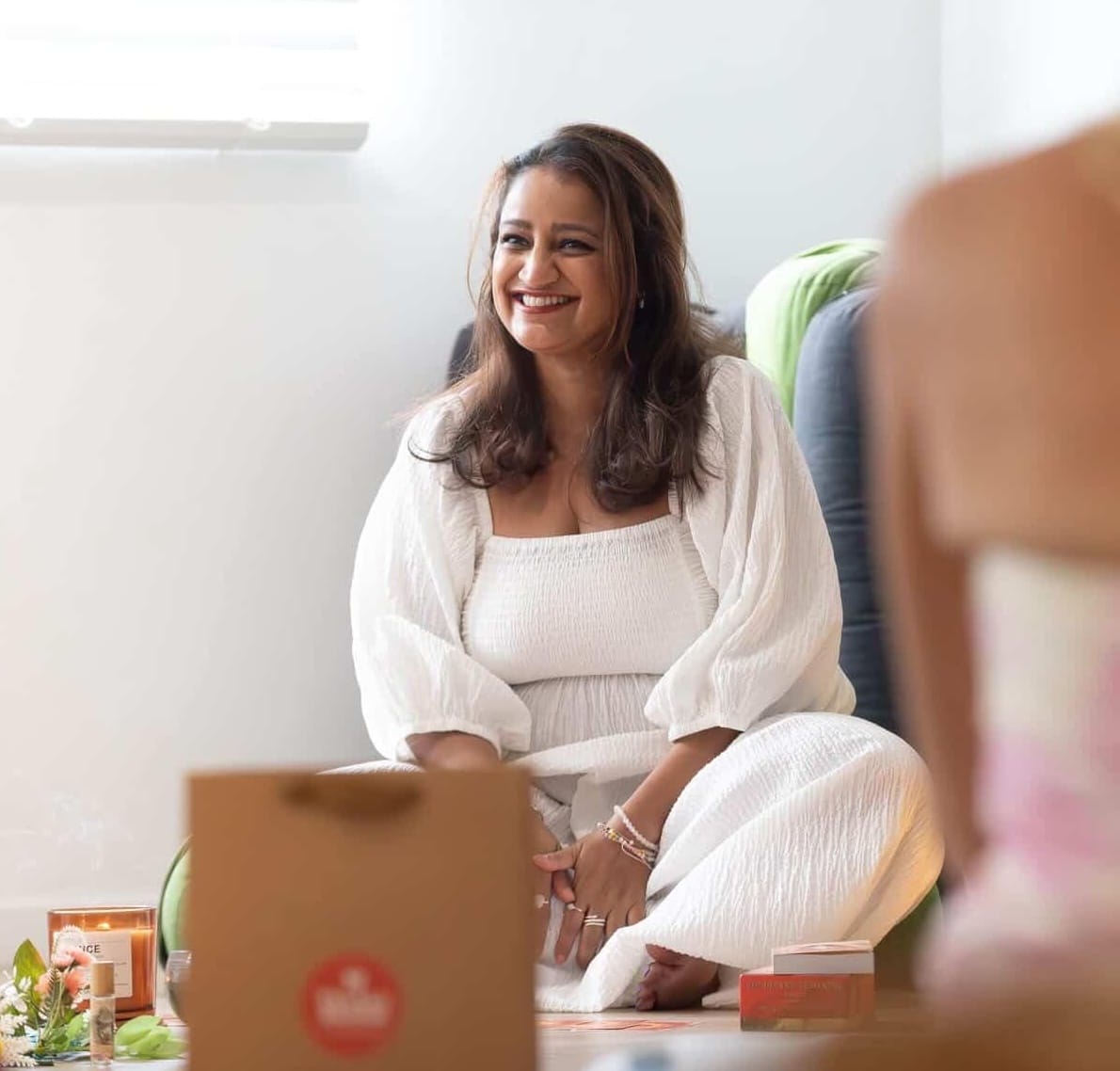
I sat down with Dhara, the founder of Soma Yoga Flow and the facilitator I’m co-creating a retreat with in Ubud this year, to explore how she thinks about this work and what it means to hold space differently.
Her approach doesn’t follow the usual formula.
There are no promises of reinvention, no pressure to leave transformed.
What she creates is something increasingly rare: space where women can land without having to explain why they need it.
What emerged in our conversation was an honest look at what it takes to hold space for women in transition, the personal journey that shaped her approach, and why slowing down, for so many women, feels both unfamiliar but necessary.

Take me back to the beginning. When and how did you first come to yoga?
I first came to yoga at a time when I was feeling quite disconnected from myself, from my body, my emotions, and even the direction of my life.
Like many people, I initially approached it through the physical practice, thinking it would help me feel stronger or more put together.
Very quickly, I realised it was giving me something much deeper.
It became one of the first spaces where I could slow down, breathe, and actually feel what was going on within me, without needing to fix it or push through it.
Over time, yoga became less about how I moved and more about how I related to myself.
That’s really where the journey began, not just as a practice, but as a way of coming home to myself.
Was there a moment when these practices shifted from something you did to something you needed?
There wasn’t one single moment, but rather a period where everything felt quite overwhelming internally, even if from the outside things looked fine.
I was holding a lot.
Expectations, emotions, pressure.
And I realised I didn’t actually have the tools to process or release any of it. I was used to coping and pushing through.
That’s when these practices shifted.
Breathwork, meditation and sound healing became less of a wellness routine and more of a support system.
They gave me a way to regulate my nervous system, to move emotion instead of storing it, and to sit with myself in a more compassionate way.
It was the first time I experienced what it feels like to soften instead of brace, and that changed everything.
You’ve spent over a decade holding space for women in transition. What transition were you navigating when you realised this was your work?
The transition I was navigating was largely internal.
It was about identity, worth, and what it means to be a woman on my own terms.
There were moments where I questioned my path quite deeply, especially around relationships, marriage, and motherhood, and whether choosing differently made me somehow less.
At the same time, I was navigating my relationship with my body and the pressure to constantly hold everything together.
Through my own journey, and through travelling and connecting with women from different backgrounds, I began to see that so many of us were carrying similar questions, often quietly.
That was a turning point.
I realised this work wasn’t about teaching yoga in the traditional sense.
It was about creating spaces where women could feel safe enough to soften, to be seen, and to reconnect with themselves, especially during times of transition.
Our retreat is called A Pause in the Season. Why does pausing feel so radical for women?
Pausing feels radical because, as women, we’ve been conditioned to keep going.
To hold everything together, to care for others, to be productive, to push through, even when our bodies are asking for something different.
Slowing down can feel unfamiliar, even uncomfortable, because we’re not always taught how to be with ourselves without doing.
There can also be a lot of guilt around rest. Like we have to earn it or justify it.
Choosing to pause, especially in the middle of a life transition, is actually a very powerful act.
It’s a way of saying I’m going to listen to myself now. And that’s not something many women have been given permission to do.
What do women in transition need that they’re almost never given space for?
More than anything, they need space to feel.
Not to fix, not to rush into the next version of themselves, not to have everything figured out, but to actually sit with what’s changing.
So many women are moving through hormonal shifts, identity shifts, emotional waves, and still expected to function as if nothing is happening.
What’s often missing is space to rest without guilt, space to be supported rather than be the one supporting everyone else, and space to be witnessed without needing to explain or justify.
There’s also a deep need to reconnect with the body in a way that feels safe and non-judgmental.
You’ve built your work around slowing down. Was there a time when you were living the opposite of that?
Yes, completely.
There was a time when I was constantly in motion, doing, achieving, holding everything together, staying busy. From the outside, it probably looked like I was managing well.
Internally, I felt disconnected and tired.
My body was often tense, my mind always active, and I didn’t really know how to switch off.
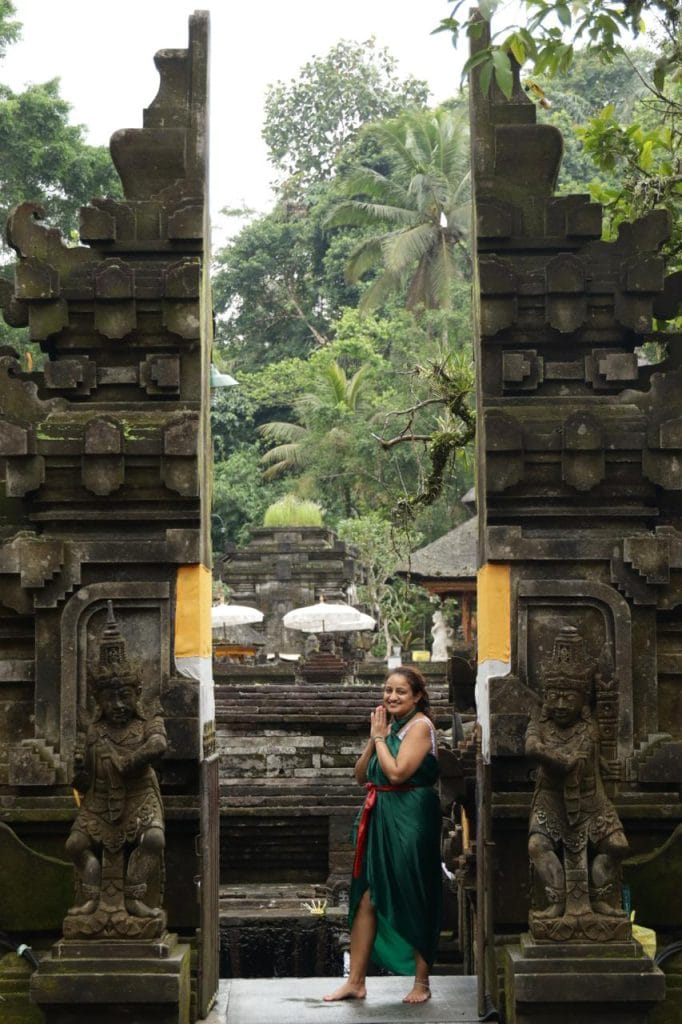
What shifted was the realisation that pushing through wasn’t sustainable, and it wasn’t bringing me closer to myself.
Through breathwork, restorative yoga and sound healing, I began to experience what it feels like to soften, to slow down without losing myself.
That changed my understanding of strength.
Now, slowing down isn’t something I see as a luxury. It’s essential. It’s something I consciously create space for, both in my own life and in the spaces I hold for others.
What do you wish more people understood about restorative practices?
One of the biggest misconceptions is that restorative practices are passive, or even lazy. In reality, they’re deeply active, just in a different way.
When the body finally feels safe enough to slow down, that’s when real repair begins.
The nervous system starts to regulate, emotions can move, and the body can restore itself.
It’s not about doing nothing.
It’s about creating the conditions where the body can do what it’s naturally designed to do.
For many people, especially those used to constant doing, that can feel confronting at first. Yet it’s also where the deepest shifts happen.
If someone has never been to Ubud, how would you describe what it feels like to be there?
Ubud has a very unique energy.
It’s hard to fully describe, but you feel it as soon as you arrive.
There’s a softness to it.
A sense of being held by nature, the rice terraces, the jungle, the stillness.
Life moves a little slower, and somehow that gives you permission to slow down too.
It becomes less about being somewhere new and more about reconnecting with something within yourself that’s been quiet for a while.
If you could speak directly to the woman who’s hesitating, what would you tell her?
I would say, gently, that I understand that feeling.
So many women are used to putting themselves last, waiting until everything else is taken care of, until it feels like the right time, or until they’ve somehow earned the space to rest.
That moment rarely just appears.
If something in you is drawn to this, it’s worth listening to.
This isn’t indulgence. It’s support. It’s giving your body and your nervous system what they’ve likely been needing for a long time.
You don’t have to arrive feeling ready or certain.
You just have to arrive as you are.
What’s one promise you can make to the women joining this retreat?
The one promise I can make is that this will be a space where you don’t have to hold everything together.
A space where you can soften without being judged.
Where you can rest without needing to explain why.
Where you can be supported instead of always being the one supporting others.
You won’t be asked to perform a transformation. You’ll be gently guided and supported in a way that allows something real to shift, at your own pace, in your own way.
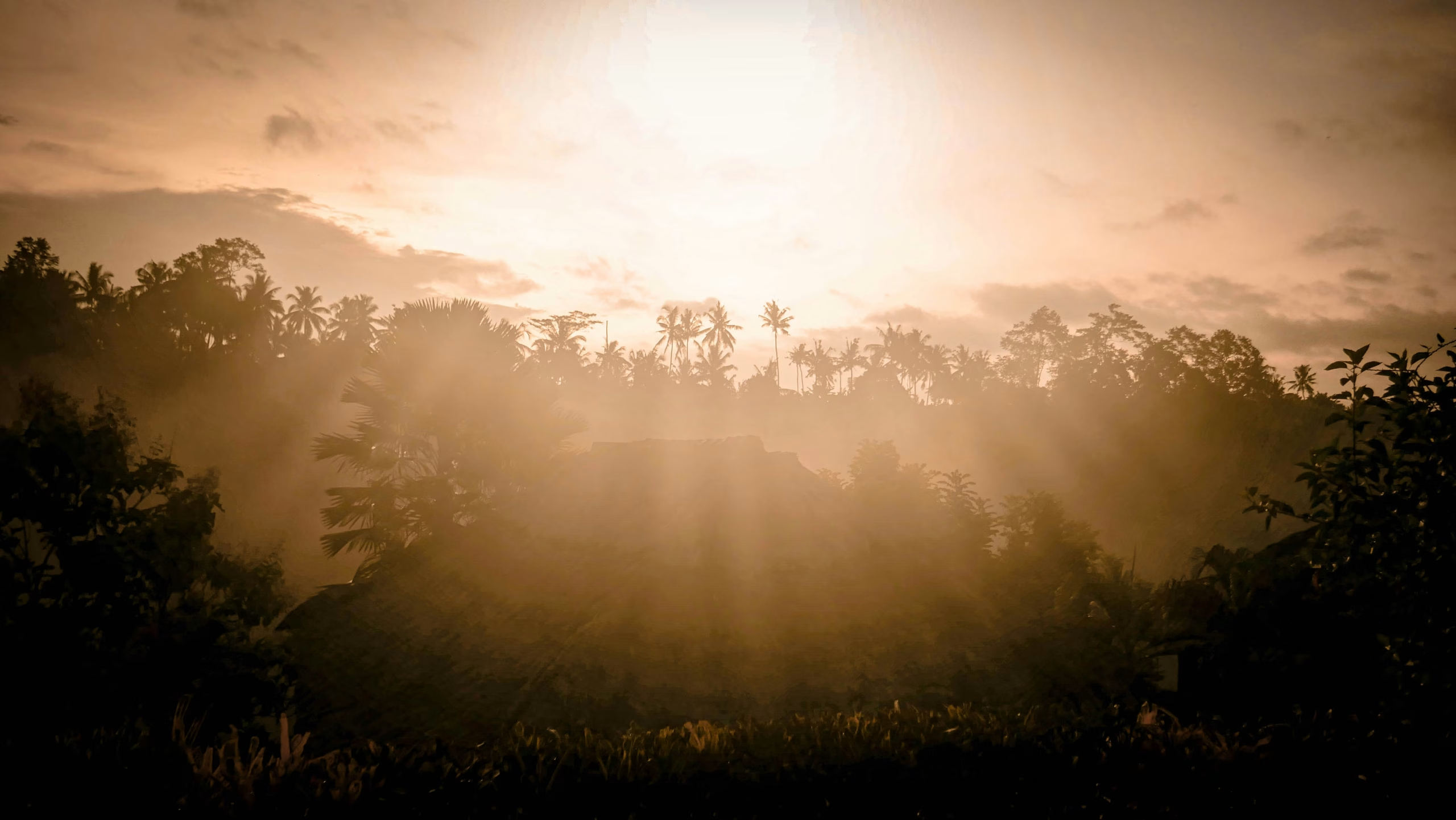
What stays with me from this conversation is how Dhara talks about wellness, as someone who’s actually lived through the unraveling that makes this work necessary.
In an industry increasingly driven by content cycles and aesthetic branding, her approach stands out because it refuses to perform.
There’s no promises of becoming your best self, just an honest acknowledgment that sometimes what we need most is space to stop holding everything together.
This is what drew me to co-creating A Pause in the Season with her.
The retreat isn’t designed around a transformation arc or an experience curated in every single detail.
It’s built around what Dhara has spent over a decade understanding: that real restoration happens when we’re finally given permission to soften, and that permission is something most women have been waiting a long time to receive.
If you’ve been feeling the pull toward something quieter, something that doesn’t ask you to arrive already fixed or ready, this might be exactly what you’ve been looking for.
A Pause in the SeasonP.S. Connect with Dhara on Instagram